What to Expect During Your First Craniosacral Therapy Session
If you've never experienced craniosacral therapy, you may be wondering what actually happens during a session. How is it different from massage? What does the therapist do? Will you feel anything? And perhaps most importantly, what should you expect afterward?
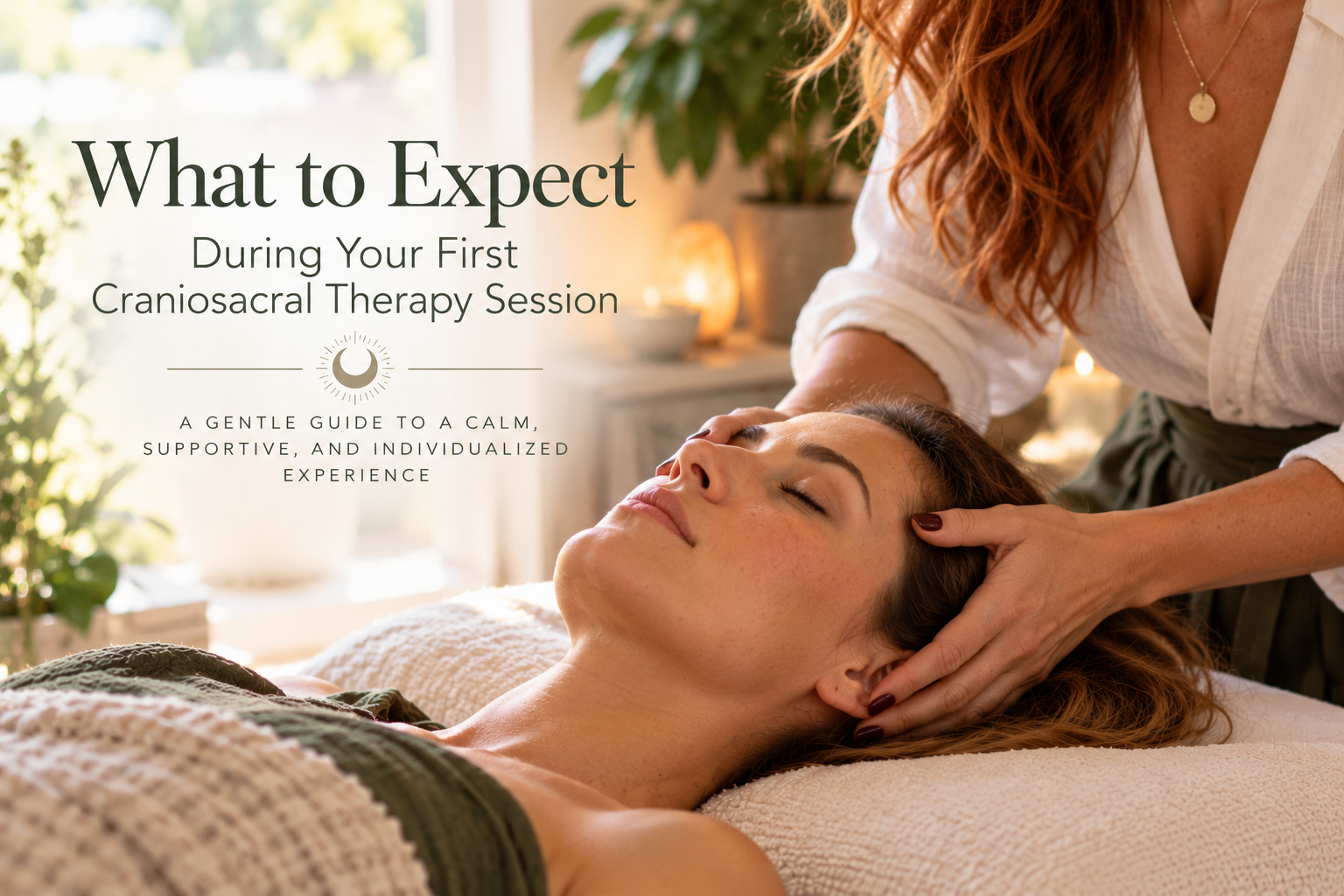
Craniosacral therapy is a gentle, hands-on approach to bodywork that emphasizes careful listening, subtle touch, and an individualized experience. Unlike traditional massage, which often involves kneading or manipulating muscles, craniosacral therapy typically uses light, sustained contact to explore patterns of tension, movement, and comfort throughout the body.
Whether you're seeking a quieter moment in a demanding life, exploring supportive bodywork for physical discomfort, or simply curious about the experience, knowing what to expect can help you arrive feeling more comfortable and informed.
Before Your Session
Your first appointment begins with a conversation. We'll discuss your health history, any areas of discomfort or concern, and what you're hoping to gain from our time together. This is also an opportunity to ask questions, share preferences, and let me know about anything that might affect your comfort during the session.
You don't need to prepare in any special way. Comfortable clothing is ideal, as craniosacral therapy is generally performed fully clothed. You're welcome to communicate any concerns about touch, positioning, or physical limitations before we begin.
There is no expectation that you arrive feeling relaxed. You can come exactly as you are.
What Happens on the Treatment Table?
During the session, you'll typically lie comfortably on a padded treatment table, either on your back or in another position that accommodates your needs. Pillows and bolsters can be used for additional support.
I use gentle, attentive contact at various areas of the body, which may include the head, neck, shoulders, spine, sacrum, or feet. The amount of pressure is generally very light, and the work does not involve forceful adjustments or manipulation.
The pace is unhurried. Rather than following an identical sequence with every client, I adapt the session to your individual presentation, comfort, and responses.
You are always welcome to ask questions, change positions, request a different approach, or pause the session. Your comfort and consent remain central throughout our work together.
What Might You Feel?
People experience craniosacral therapy in different ways. Some notice warmth, subtle shifts in muscle tension, changes in breathing, or a sense of heaviness or ease. Others become deeply relaxed, feel sleepy, or notice very little during the session itself.
All of these experiences are normal.
There is no particular sensation you need to achieve, and the absence of noticeable sensations does not mean you're doing anything incorrectly. You don't have to concentrate, meditate, or make anything happen.
Simply allow yourself to rest and notice whatever is present.
Understanding the Unwinding Process
During a craniosacral therapy session, you might notice subtle, involuntary movements as your body settles into the work. This natural response is known as unwinding.
Unwinding can take many forms: a gentle turning of the head, an instinctive shift in posture, or a gradual stretching and repositioning of the body. These movements are unforced, arising without conscious planning. While some people experience them quite distinctly, others remain comfortably still throughout their entire session.
As a practitioner, I approach these responses with curiosity and attentive touch, holding space for your body's natural intelligence without directing or forcing an outcome. There is no need to encourage movement or make anything happen.
Unwinding offers a unique opportunity to explore the connection between movement, sensation, and bodily awareness. It invites a deeper appreciation of the body's subtle capacity for expression.
Whether your session involves active movement, deep stillness, or anything in between, every response is welcome. There is no "right" way for your body to experience craniosacral therapy.
How Is Craniosacral Therapy Different From Massage?
Although both approaches involve therapeutic touch, their methods and emphasis differ.
Traditional massage often uses pressure, movement, and direct manipulation of soft tissues to address muscular tension. Craniosacral therapy generally involves lighter contact and longer periods of stillness, with an emphasis on subtle palpation, comfort, and the body's responses to touch.
Many people appreciate craniosacral therapy precisely because it offers a different kind of bodywork experience, one that does not require deep pressure or vigorous physical techniques.
What About the Nervous System?
Our nervous systems are constantly gathering information from within and around us. Sensations of pressure, temperature, movement, and touch all contribute to how we experience our bodies and surroundings.
Gentle, predictable touch in a comfortable environment may support relaxation and a greater awareness of bodily sensations. Some clients describe feeling calmer or more settled following a session.
Research into craniosacral therapy is ongoing, and evidence for treating specific medical conditions remains limited. It is best understood as a complementary bodywork approach rather than a replacement for medical evaluation or treatment.
What Should You Expect Afterward?
After your session, you may feel relaxed, rested, or more aware of particular sensations in your body. Some people notice changes in their perception of tension or comfort, while others experience no immediate difference.
There is no universal response, and individual experiences can vary from one appointment to the next.
You can generally return to your usual activities afterward. Taking a few moments to transition back into your day can be pleasant, but there is no special recovery protocol required.
If you're receiving care for a medical condition, it's important to continue following the recommendations of your healthcare provider.
A Collaborative Approach to Care
One of the aspects I value most about craniosacral therapy is the opportunity to work with each person as an individual. Your history, preferences, physical comfort, and goals all help shape our time together.
My intention is to offer a therapeutic environment where you feel comfortable asking questions, expressing your needs, and participating in decisions about your care.
You don't need to know anything about craniosacral therapy before arriving. Curiosity is enough.
If you're considering your first session, I welcome you to explore craniosacral therapy at Craniosacral Therapy Reno. Whether you're new to bodywork or looking for a different approach to therapeutic touch, your experience will be guided by thoughtful attention, professional care, and respect for your individual needs.
With care,
Darcy