Before We Had Words, We Had Movement: The Vestibular System and the Nervous System
Before we understood language, we understood movement.
We knew the feeling of being carried. Rocked. Swayed. Held against another body while it moved through space.
Long before a baby can understand the words you’re safe, their nervous system is already receiving information through touch, movement, rhythm, sound, and the experience of being held.
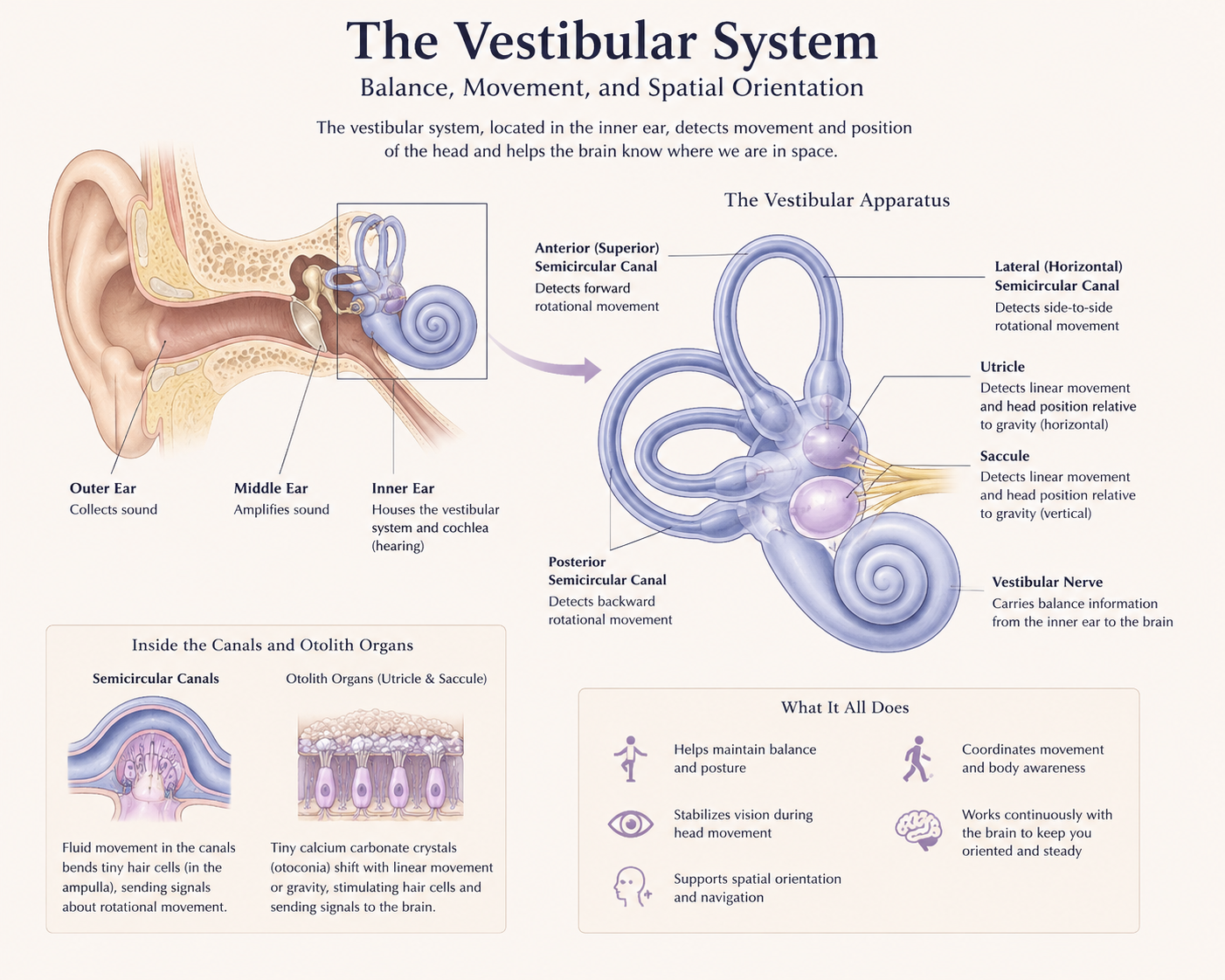
One of the systems helping make sense of all of this is the vestibular system, an extraordinary sensory system located within the inner ear that helps the brain understand movement, balance, gravity, and where the body is in space.
Although we often associate the vestibular system with balance, its influence reaches much further than simply keeping us upright.
Our Internal Sense of Movement
Inside the inner ear are tiny structures that detect changes in the movement and position of the head.
Every time we turn our head, bend down, stand up, walk across a room, spin, sway, lie down, or stand upright, the vestibular system is gathering information.
That information is continually integrated with input from our eyes, muscles, joints, and other sensory systems to help the brain answer some very basic questions:
Where am I?
Which way is up?
Am I moving, or is the world around me moving?
What does my body need to do to remain oriented?
Most of the time, this happens completely outside our conscious awareness.
When sensory information feels confusing or overwhelming, or when we’re stressed, exhausted, overstimulated, or disconnected from our bodies, we may become much more aware of our need for grounding and orientation.
Why Do We Rock and Sway?
There’s a reason humans instinctively rock babies.
Gentle, predictable movement provides rich sensory information to the developing nervous system. Combined with warmth, touch, familiar sounds, and the presence of a caregiver, rhythmic movement can be deeply settling for many infants.
We don’t outgrow our relationship with movement.
Think about the things adults instinctively do when trying to regulate themselves.
We pace while thinking.
We rock in rocking chairs.
We sway while holding someone we love.
We take walks when our minds feel overwhelmed.
Some people bounce a leg underneath the table or gently shift their weight from side to side without even realizing they’re doing it.
Sometimes the body finds movement before the mind understands what it needs.
Before We Had Words, We Had Sensation
This is one of the things I find so beautiful about working with the nervous system.
We often try to think our way into feeling better.
And of course, words, insight, therapy, and understanding can be incredibly valuable.
But the nervous system also communicates through something much older than words.
Sensation.
Pressure.
Movement.
Stillness.
Rhythm.
Touch.
Orientation.
The feeling of our feet against the ground.
The feeling of being supported underneath us.
The experience of noticing, perhaps for the first time all day, that we don’t have to hold ourselves quite so tightly.
A baby doesn’t need an intellectual explanation of safety before responding to a steady pair of arms.
And somewhere inside the adult nervous system, that ancient sensory language still exists.
The Vestibular System and Craniosacral Therapy
In craniosacral therapy, I’m continually paying attention to the subtle ways a person’s body responds to touch, movement, stillness, and changes in position.
Sometimes a session becomes profoundly quiet.
Sometimes the body seems to want a small amount of movement.
There may be a subtle rocking or unwinding quality, a change in breathing, or simply a sense that the person is becoming more aware of where their body is resting on the treatment table.
Rather than trying to force the nervous system into relaxation, I think of this work as creating an environment in which the body has time to receive information without being rushed.
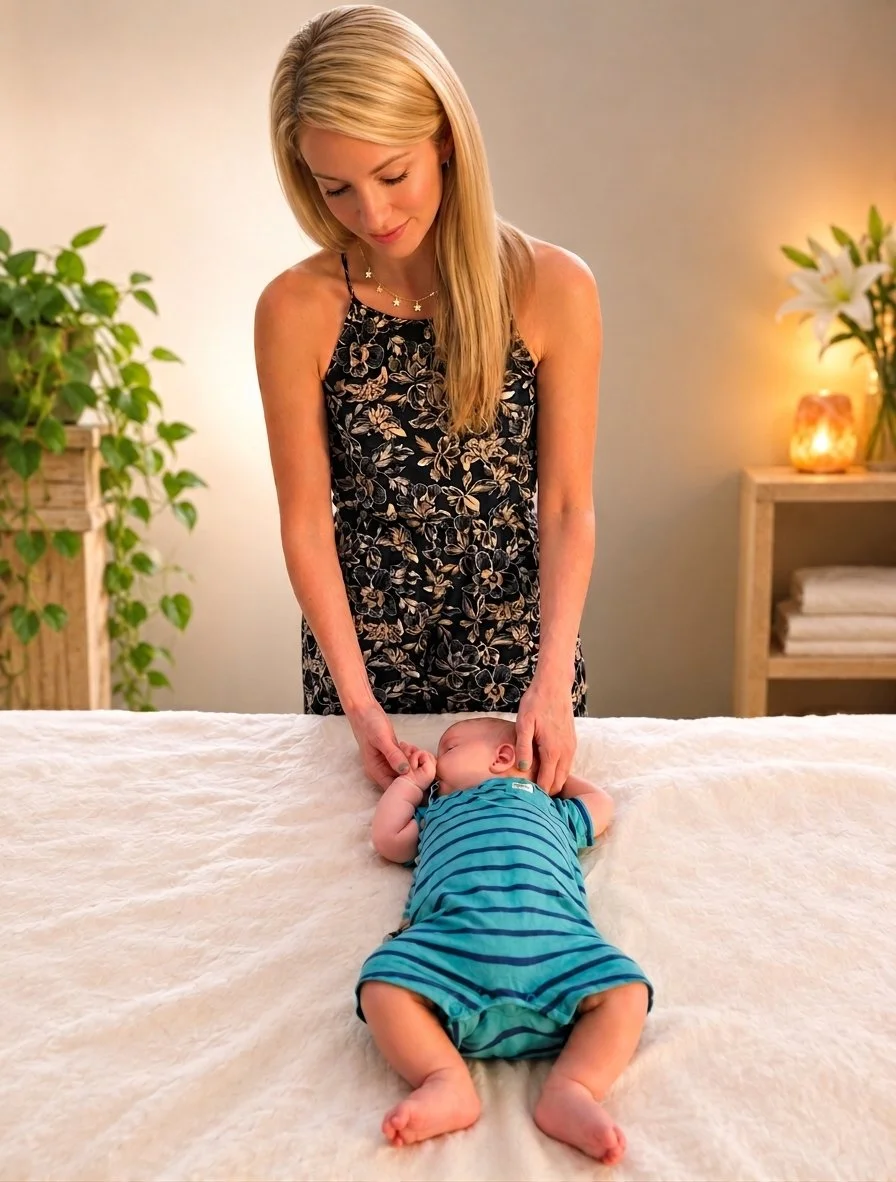
For babies and children, this may look different than it does for adults.
Babies naturally communicate through their bodies. They turn toward and away. They wiggle. Stretch. Curl. Push. Settle. Look around the room. Reach for a parent.
When I work with infants, I’m not expecting them to lie perfectly still.
Movement is communication…
and part of my job is listening.
We Are Designed to Orient
One of the simplest things we can do for ourselves is remember that regulation doesn’t always have to mean becoming perfectly still.
Sometimes the nervous system needs movement.
You might notice what happens when you take a slow walk without your phone.
Rock gently in a chair.
Stretch.
Look slowly around the room and allow your eyes to land on things that feel pleasant or familiar.
Feel your feet against the floor.
Notice the support underneath your body.
Let yourself sway for a moment.
None of these things need to become another wellness assignment.
They are simply ways of remembering something the body has known since the beginning:
We experience the world through sensation before we ever make meaning out of it.
And sometimes, when words aren’t enough, returning to the language of the body, movement, touch, rhythm, orientation, and rest can give us another way home to ourselves.